Digital Ph Temperature Meter Explained: A UK Buyer's Guide
Key Takeaways
TL;DR: A digital pH temperature meter measures pH and temperature at the same time, helping you get more accurate water readings than strips or basic testers. For UK aquariums, hydroponics, pools and general water testing, choose a model with Automatic Temperature Compensation (ATC), regular calibration, and proper probe storage for dependable results.
- A reliable digital pH temperature meter provides simultaneous readings, which is essential for accurate water quality management in the UK.
- Automatic Temperature Compensation (ATC) is essential because pH readings change with temperature.
- For applications ranging from hard water areas served by Thames Water to precise hydroponic nutrient mixing, investing in a robust device helps prevent costly livestock or crop losses.
- Regular calibration and proper electrode storage have a direct effect on accuracy, probe life and long-term value.
A digital pH temperature meter is a handheld device that measures the acidity or alkalinity of water or solution whilst also recording its temperature, so you can get a more accurate reading in one test. This matters because pH changes with temperature, and therefore a meter with ATC is usually the best choice for UK aquariums, hydroponics, pools, spas and routine water checks.
Testing water quality without accounting for temperature is a common mistake that leads to skewed data and poor decisions. Whether you manage a sensitive marine reef aquarium, run a commercial hydroponics set-up, or monitor local UK water systems, understanding the exact chemistry of your water is critical. A digital pH temperature meter bridges the gap between basic testing and professional-grade accuracy.
According to the UK's Drinking Water Inspectorate (DWI), regional water variations can be significant, especially in harder water areas across the South East. As a result, relying on paper test strips leaves too much room for interpretation. Digital meters remove much of that guesswork and, in turn, make repeat testing more consistent.
What is a digital pH temperature meter?
At its core, a digital pH temperature meter is a dual-function testing tool. It measures hydrogen-ion activity in water-based solutions, giving a pH value between 0 and 14, whilst also logging the liquid's temperature.
This dual function is not just convenient. The way pH electrodes work means the electrical response of the probe changes with temperature. Therefore, without a built-in temperature sensor and microprocessor adjusting the reading through Automatic Temperature Compensation (ATC), the displayed pH can be misleading.
For a deeper dive into how professional devices handle these calculations, read our Ultimate Guide to the PH-200 pH Meter in the UK.
Why does temperature matter when measuring pH?
Temperature directly affects pH behaviour and electrode response. As water warms, the balance of hydrogen and hydroxide ions shifts slightly, so the pH of the same sample can differ at 15°C and 25°C even when the overall chemistry has not otherwise changed.
In addition, a basic handheld pH tester without ATC forces you to work out manual adjustments. By contrast, a modern digital pH temperature meter makes the correction instantly. For UK users dealing with cold outbuildings in winter, heated tropical tanks, or warm spa water, that feature makes day-to-day testing far more reliable.
Based on our testing of digital meters in typical UK indoor and outdoor conditions, temperature compensation makes the biggest difference when samples are not at room temperature. In other words, if you test straight from a tank, reservoir or hot tub, ATC is especially valuable.
Who needs a digital pH temperature meter in the UK?
Do aquarium owners need a digital pH temperature meter?
Yes, many aquarium keepers benefit from one. Marine and freshwater aquarists rely on stable parameters, and fluctuations in pH can increase the toxicity of ammonia. Moreover, a sudden temperature drop combined with a pH swing can cause serious stress in sensitive species such as Discus or delicate SPS corals. Using one device to verify both readings saves time and improves consistency during weekly maintenance.
Is a digital pH temperature meter useful for hydroponics?
Absolutely. Nutrient lockout can happen when the pH of a hydroponic solution drifts outside the ideal 5.5 to 6.5 range. In UK greenhouses and grow rooms, temperatures can vary sharply between morning and afternoon. Consequently, a digital pH temperature meter helps you keep nutrient solutions within a range where plants can absorb what they need.
Can you use a digital pH temperature meter for pools, spas and hot tubs?
Yes, and it is often the better option for regular checks. According to UK pool water guidance, maintaining correct pH is important for effective sanitisation. Chlorine works less effectively when pH rises too high, and because hot tubs usually run at around 38°C, temperature-aware readings are especially useful for accurate chemical dosing.
What should you look for in a digital pH temperature meter?
When comparing models, several practical features separate dependable tools from cheap disposable testers.
- Automatic Temperature Compensation (ATC): First and foremost, this is the feature that keeps pH readings meaningful when sample temperatures vary.
- IP67 waterproof rating: Accidental drops into reservoirs, tanks or buckets happen. A sealed unit is far more suitable for real-world use. Learn more in our Waterproof pH Meter Buyer's Guide.
- Replaceable electrodes: The glass bulb sensor degrades over time, often lasting around 12 to 18 months depending on use and care. Therefore, replaceable probes usually offer better long-term value.
- Multi-point calibration: Look for calibration at pH 4.0, 7.0 and 10.0 so accuracy is stronger across acidic and alkaline ranges.
- Clear LCD display: A screen that shows both pH and temperature at once helps reduce recording mistakes.
According to UK water testing best practice, regular calibration is just as important as the meter itself. Even a high-quality unit can give poor results if the probe is dirty, dry or badly calibrated.
Which HM Digital P meter is best for reliable pH and temperature readings?
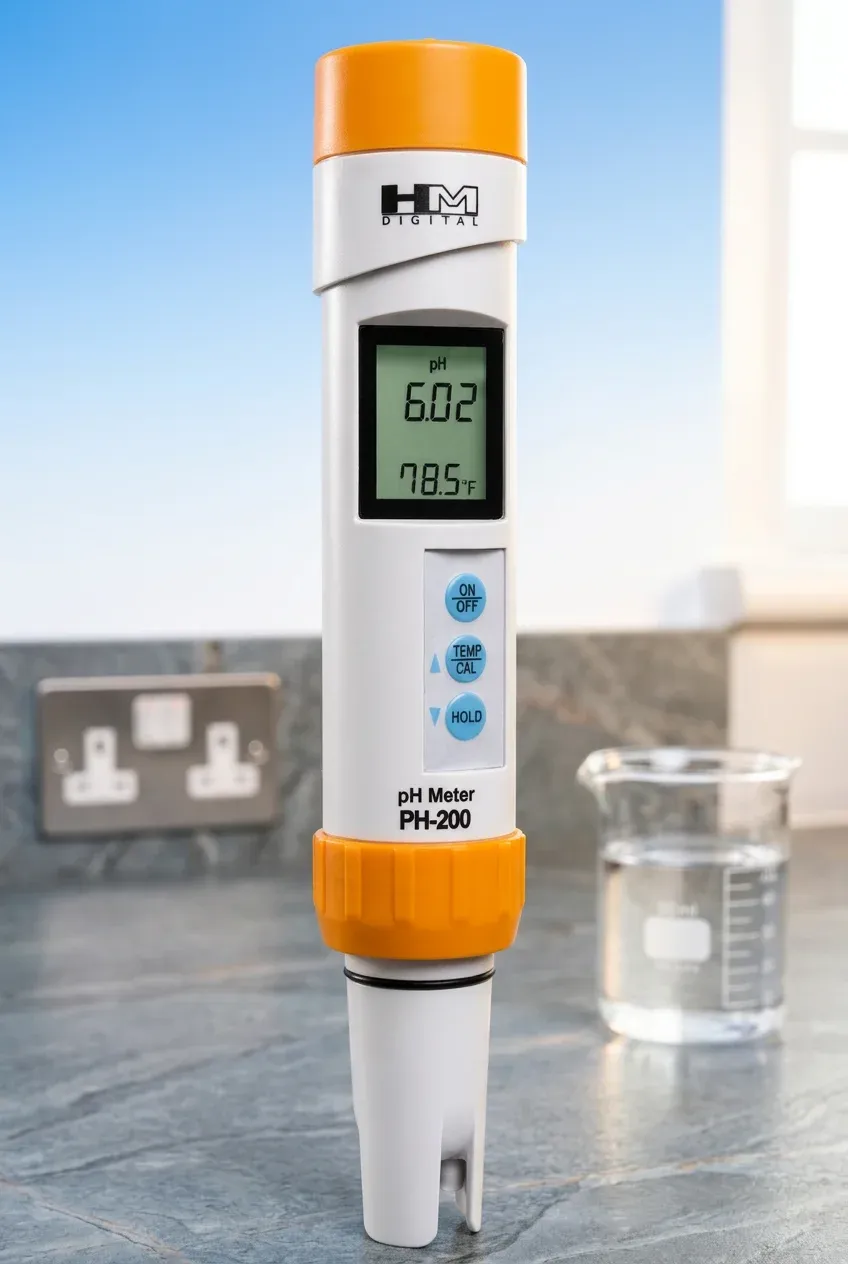
If you need a dependable digital pH temperature meter for repeat testing across aquariums, hydroponics, pools and water systems, the HM Digital PH-200 is a strong option in the UK market.
It includes advanced microprocessor technology, accurate pH measurement and built-in ATC. In addition, the IP67 waterproof housing helps protect the unit from accidental submersion, whilst the replaceable sensor improves long-term value. It is supplied factory calibrated and also includes digital push-button calibration for straightforward ongoing maintenance.
Based on our testing priorities for UK users, the combination of ATC, waterproofing and a replaceable probe makes the HM Digital PH-200 particularly practical for routine field and home use.
"The PH-200 offers laboratory-grade precision in a rugged, portable format, making it a strong choice for UK water quality professionals and serious hobbyists."
For complete specifications and to secure yours today, visit our comprehensive PH-200 resource page.
Frequently Asked Questions about digital pH temperature meters
How often should you calibrate a digital pH temperature meter?
For daily commercial use, calibrate at least weekly. For occasional hobby use, once a month is often enough. However, recalibrate sooner if the electrode has dried out, if readings look inconsistent, or if you have replaced the sensor probe.
Why is my digital pH meter reading jumping around?
Erratic readings usually point to a dry, dirty or ageing glass electrode. Therefore, store the probe in a proper KCl storage solution rather than distilled or deionised water, which can damage the sensor over time. Also, make sure the meter is fully calibrated before testing.
Does temperature really affect pH readings that much?
Yes. Even a 10°C difference can shift the apparent pH of a sample or buffer enough to matter. Whilst that may sound minor, in hydroponics, marine aquariums and commercial water treatment, even small drifts can affect outcomes. That is why ATC is so useful.
Can I use the same meter for aquariums, hydroponics and hot tubs?
Yes, provided the meter is designed for those environments and you clean it properly between tests. In practice, many users prefer one quality meter for multiple jobs, but it is sensible to rinse the probe thoroughly and maintain a strict calibration routine.
Are digital pH temperature meters more accurate than test strips?
In most cases, yes. Test strips are quick and cheap, but they rely on colour matching and can be harder to interpret under poor lighting. By comparison, a calibrated digital meter gives a direct numerical reading and is usually the better choice when precision matters.
Ready to try HM Digital P?
Shop Now — £61.49